
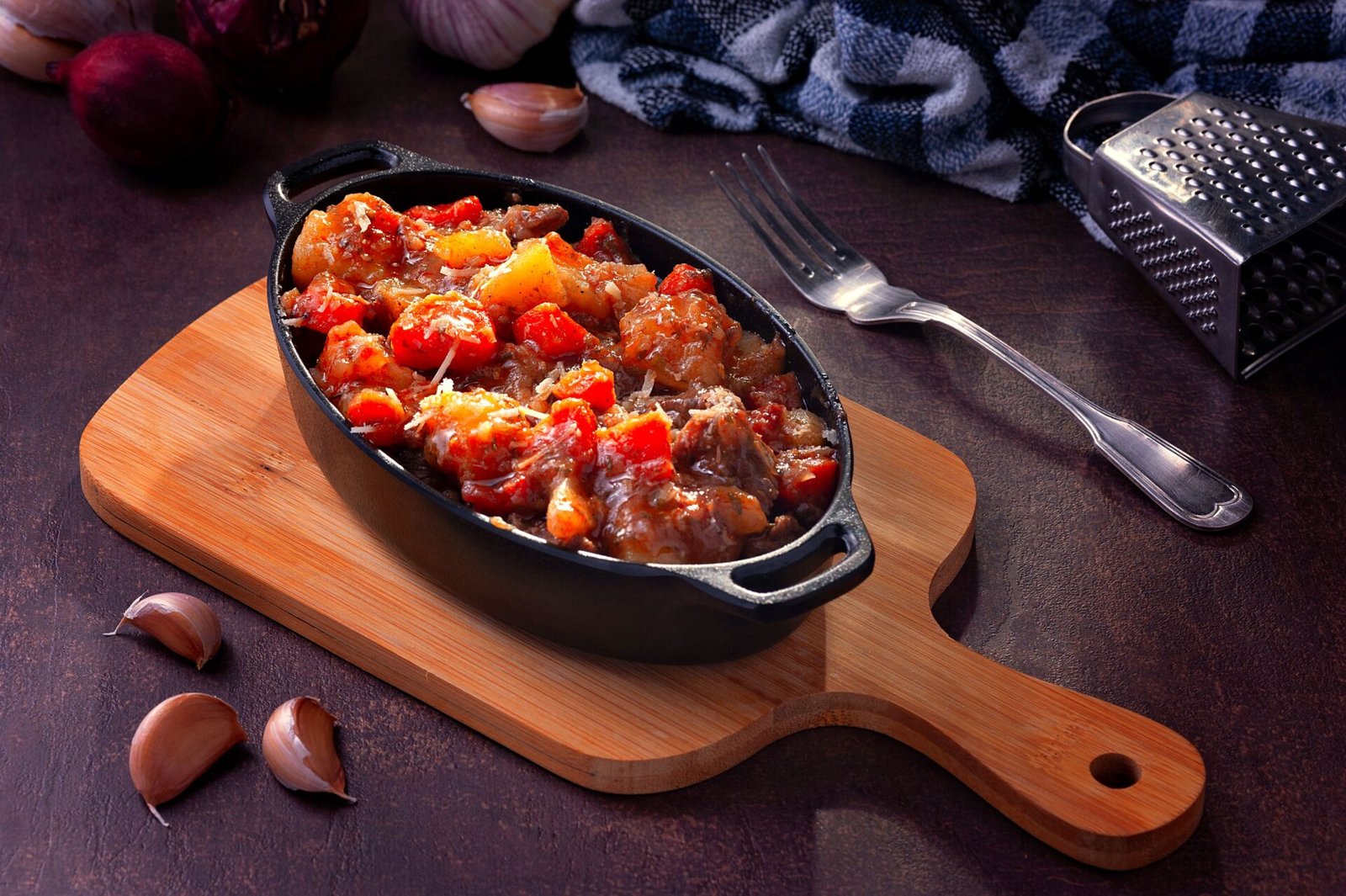
There’s nothing quite like the rich, savory aroma of Filipino Menudo simmering on the stove – tender pork, melt-in-your-mouth liver, and vibrant vegetables swimming in a sweet, tangy tomato sauce. It’s the ultimate comfort food, a dish that brings families together and fills homes with warmth. Whether it’s a fiesta, a Sunday gathering, or just a cozy weeknight dinner, Menudo is a classic that never fails to impress.
I first fell in love with Menudo at a family celebration, where it was served alongside steaming white rice and crusty bread. The combination of flavors was unforgettable – the sweetness of the raisins, the earthiness of the liver, and the savory depth of the tomato sauce. It’s no wonder this dish has become a staple in Filipino households, with each family adding their own special touch. For more hearty and comforting meal ideas, explore our collection of dinner recipes.
This recipe is a celebration of Filipino cuisine. It’s hearty, flavorful, and surprisingly simple to make. The combination of pork, liver, potatoes, carrots, and chickpeas in a sweet tomato sauce creates a dish that’s both satisfying and nutritious. Serve it over steamed rice, and you’ll have a meal that’s guaranteed to become a family favorite. For more Filipino-inspired dishes, check out our appetizer recipes.
Why This Recipe Works: The combination of marinated pork, tender liver, and vibrant vegetables in a sweet tomato sauce creates a perfectly balanced, hearty stew. The raisins add a subtle sweetness that complements the savory flavors, while the chickpeas provide a satisfying texture. It’s a dish that tastes even better the next day.
What Is Filipino Menudo?
Filipino Menudo is a traditional stew made with pork, liver, and vegetables simmered in a sweet tomato sauce. Unlike the Mexican dish of the same name, which features tripe in a chili broth, Filipino Menudo is a hearty, tomato-based stew that’s perfect for family meals and special occasions[reference:0][reference:1]. The name “menudo” comes from the Spanish word for “small bits,” referring to the small, bite-sized pieces of meat and vegetables[reference:2]. It’s one of the most common offerings in carinderias (small eateries) and is a staple at potlucks and buffets[reference:3].
Why It’s a Filipino Favorite
Menudo’s enduring popularity comes from its incredible flavor, versatility, and affordability. It’s a dish that can be made with simple, budget-friendly ingredients, yet it tastes like a celebration. Every Filipino household has their own version – some add hotdogs for the kids, others include bell peppers for color, and the use of raisins adds a subtle sweetness that balances the savory tomato sauce[reference:4]. It’s a dish that stretches well and tastes even better the next day after the flavors meld together[reference:5].
Flavor & Texture Profile
- Flavor: Savory, sweet, and tangy – the tomato sauce provides a rich base, while the raisins add a subtle sweetness. The pork is tender and juicy, and the liver adds an earthy depth.
- Texture: Tender pork, soft potatoes and carrots, firm chickpeas, and the occasional burst of sweetness from the raisins – a satisfying combination of textures in every bite.
- Aroma: The warm, inviting scent of garlic, onions, and tomato sauce simmering with pork and liver.
Why You’ll Love This Recipe
Classic Filipino Dish
A beloved staple that’s perfect for family meals and special occasions.
Rich & Flavorful
Sweet tomato sauce, tender pork, and earthy liver create a complex, satisfying flavor.
Customizable
Add hotdogs, bell peppers, or extra vegetables to make it your own.
Better the Next Day
Like many Filipino stews, Menudo tastes even better the next day.
- Classic Filipino Dish: A beloved staple that’s perfect for family meals and special occasions.
- Rich & Flavorful: Sweet tomato sauce, tender pork, and earthy liver create a complex, satisfying flavor.
- Customizable: Add hotdogs, bell peppers, or extra vegetables to make it your own.
- Better the Next Day: Like many Filipino stews, Menudo tastes even better the next day.
- Budget-Friendly: Made with affordable, accessible ingredients.
- Feeds a Crowd: Perfect for potlucks, parties, and family gatherings.
Ingredients
For the Pork Marinade
- Pork shoulder or kasim – 2 lbs, cut into ½-inch cubes
- Soy sauce – ¼ cup
- Calamansi juice or lemon juice – 2 tablespoons
- Black pepper – ½ teaspoon
For the Stew
- Cooking oil – ¼ cup (plus more as needed)
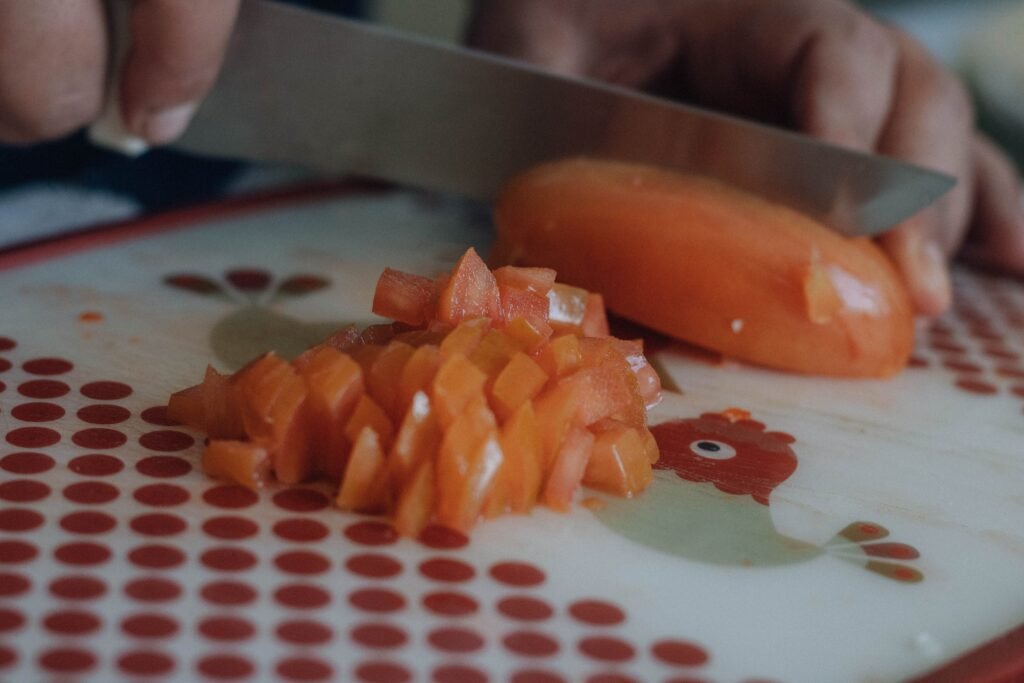
- Potatoes – 3 medium, peeled and cut into ½-inch cubes
- Carrots – 2 large, peeled and cut into ½-inch cubes
- Red bell pepper – 1 medium, seeded and cubed
- Green bell pepper – 1 medium, seeded and cubed
- Hotdogs – 3, sliced diagonally (optional but recommended)
- Pork liver or chicken liver – ½ lb, cut into 1-inch cubes
- Onion – 1 medium, chopped
- Garlic – 3 cloves, minced
- Tomato paste – 1 tablespoon
- Tomato sauce – 1 cup
Premium Ingredient Options
- Pork: Use pork belly or kasim for extra flavor and tenderness.
- Liver: Pork liver is traditional, but chicken liver is a great alternative.
- Hotdogs: Use high-quality hotdogs or sausages for added flavor.
- Tomato Sauce: Use a good-quality tomato sauce for the best flavor.
Budget Alternatives
- Use a less expensive cut of pork, like pork shoulder.
- Use store-bought tomato sauce.
- Skip the hotdogs or use a cheaper brand.
Common Ingredient Mistakes
- Overcooking the liver: Liver becomes tough and dry when overcooked. Sear it just until lightly browned and add it at the end.
- Not marinating the pork: Marinating the pork in soy sauce and calamansi adds depth of flavor.
- Using too much liquid: The stew should be thick and saucy, not watery. Simmer until the sauce has reduced.
Ingredient Substitutions
- Gluten-Free: Use tamari instead of soy sauce.
- Dairy-Free: This recipe is naturally dairy-free.
- No liver: You can omit the liver entirely – the dish still tastes wonderful without it[reference:6].
- No hotdogs: Add extra bell peppers or vegetables.
- No raisins: Omit or substitute with a little sugar for sweetness.
Equipment
Essential Tools
- Large pot or Dutch oven
- Cutting board and knife
- Measuring cups and spoons
- Wooden spoon or spatula
Optional Tools
- Meat thermometer (for checking pork doneness)
- Immersion blender (for a smoother sauce)
Step-by-Step Instructions
- Marinate the Pork
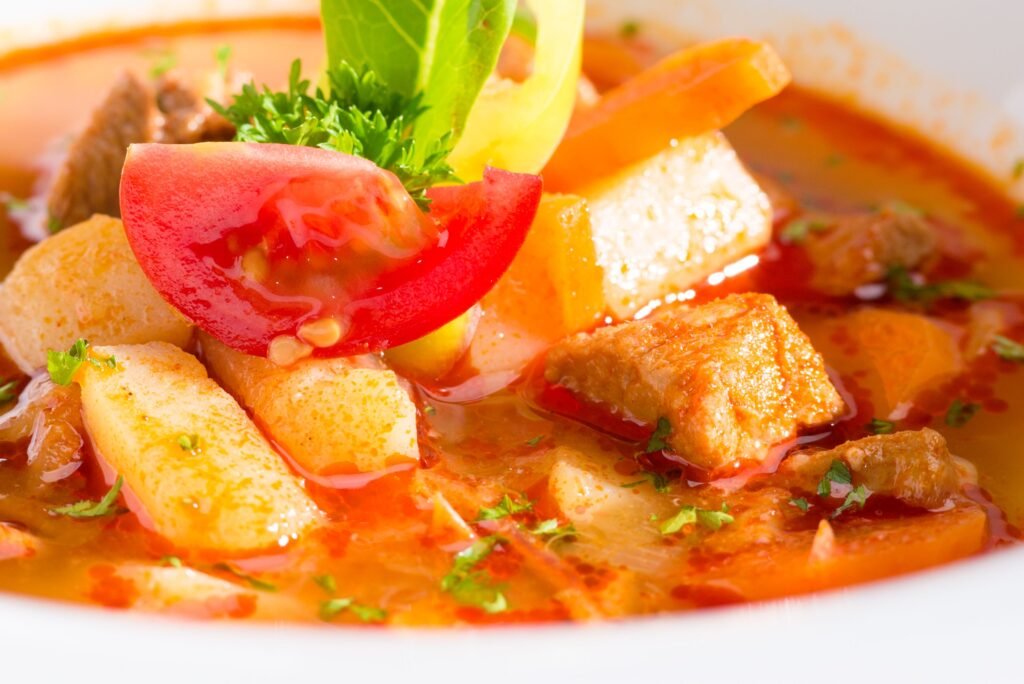
In a bowl, combine the pork cubes, soy sauce, calamansi juice, and pepper. Let it marinate for 10 to 15 minutes[reference:7]. Drain the pork well, reserving the marinade for later.
Visual cue: The pork should be evenly coated with the marinade.
Pro tip: Marinating the pork adds depth of flavor and helps tenderize the meat. - Brown the Potatoes and Carrots
In a large pan or pot, heat about ¼ cup of oil over medium-high heat. Add the potatoes and carrots and cook until lightly browned. Remove from the pan and set aside[reference:8].
Visual cue: The vegetables should be golden brown on the edges.
Pro tip: Browning the vegetables adds flavor and helps them hold their shape during simmering. - Sauté the Bell Peppers and Hotdogs
Remove excess oil from the pan, leaving about 2 tablespoons. Add the bell peppers and cook over high heat for 30 to 40 seconds. Remove and drain on paper towels[reference:9]. Add the hotdogs and cook until lightly browned. Remove and set aside[reference:10].
Visual cue: The peppers should be bright and slightly charred, and the hotdogs should be golden brown. - Brown the Liver
Add more oil to the pan if needed. Sear the liver just until lightly browned. Remove and set aside[reference:11].
Visual cue: The liver should be lightly browned on the outside but still slightly pink inside.
Pro tip: Liver continues to cook when added to the stew, so don’t overcook it now[reference:12]. - Sauté the Aromatics
In the same pan, add the onions and garlic and cook until softened[reference:13].
Aroma cue: The garlic and onions will become fragrant and translucent. - Brown the Pork
Add the marinated pork to the pan and cook until lightly browned on all sides[reference:14].
Visual cue: The pork should have a golden-brown crust.
Pro tip: Don’t overcrowd the pan – cook in batches if necessary. - Add the Tomato Paste and Sauce
Add the tomato paste and cook for about 1 minute, stirring until evenly distributed[reference:15]. Pour in the reserved marinade, tomato sauce, and water. Stir to combine and bring to a boil, skimming any scum that floats on top[reference:16].
Visual cue: The sauce should be a rich, deep red color.
Pro tip: Skimming the scum ensures a clearer, cleaner sauce. - Simmer the Pork
Lower the heat, cover, and simmer for about 35 to 45 minutes, or until the pork is tender and the sauce has slightly reduced[reference:17].
Texture cue: The pork should be fork-tender.
Pro tip: If the sauce is too thin, simmer uncovered for a few minutes to thicken it. - Add the Vegetables and Liver
Add the browned potatoes, carrots, hotdogs, garbanzo beans, raisins, and green peas. Continue to cook until the potatoes and carrots are tender[reference:18]. Add the liver and let it stand for a few seconds before stirring. Simmer until the liver is cooked through[reference:19].
Visual cue: The potatoes and carrots should be easily pierced with a fork.
Pro tip: Add the liver at the end to prevent it from becoming tough and dry[reference:20]. - Add the Bell Peppers and Season
Add the bell peppers and season with salt, pepper, and Maggi Magic Sarap (if using). Simmer until the sauce is reduced and slightly thickened[reference:21].
Pro tip: Taste and adjust the seasoning before serving. - Serve
Remove the bay leaf (if used). Serve hot over steamed white rice.[reference:22]
Chef’s Secret: For the most authentic flavor, use calamansi juice in the marinade. If calamansi isn’t available, a combination of lemon and lime juice works well. Also, don’t skip the raisins – they add a subtle sweetness that balances the savory tomato sauce and makes this dish truly special.
Expert Chef Tips
For the Perfect Menudo
- Marinate the Pork: Marinating the pork in soy sauce and calamansi adds depth of flavor and helps tenderize the meat.
- Don’t Overcook the Liver: Liver becomes tough and dry when overcooked. Sear it just until lightly browned and add it at the end.
- Brown the Vegetables: Browning the potatoes and carrots adds flavor and helps them hold their shape during simmering.
- Let It Rest: Like many Filipino stews, Menudo tastes even better the next day – the flavors meld and deepen overnight[reference:23].
- Adjust the Sweetness: The raisins add a natural sweetness. If you prefer a sweeter stew, add a little more sugar or raisins.
Flavor Balancing
- Salt: Soy sauce and salt provide the savory base.
- Sweetness: Raisins and a touch of sugar balance the acidity of the tomato sauce.
- Acid: Calamansi or lemon juice adds a bright, tangy note.
- Umami: Tomato paste and liver add deep, savory flavors.
Texture Improvement Tips
- Cut Ingredients Uniformly: Cutting the pork, potatoes, and carrots into uniform pieces ensures even cooking.
- Don’t Overcrowd the Pan: Brown the meat and vegetables in batches to ensure a good sear.
- Simmer Gently: A gentle simmer allows the flavors to meld without breaking down the vegetables.
Cooking Science: The combination of acid from the calamansi and soy sauce in the marinade helps tenderize the pork by breaking down its proteins. The tomato sauce provides acidity that balances the richness of the pork and liver, while the raisins add a natural sweetness that rounds out the flavors. Simmering allows the collagen in the pork to break down, resulting in tender, melt-in-your-mouth meat.
Troubleshooting
- Pork is tough – Simmer for a longer time until the pork is tender. You may need to add a little more water.
- Liver is tough and dry – You may have overcooked the liver. Add it at the end and cook just until it’s cooked through.
- Sauce is too thin – Simmer uncovered for a few minutes to reduce and thicken the sauce.
- Sauce is too thick – Add a splash of water or broth to thin it to your desired consistency.
- Not enough flavor – Add more soy sauce, salt, or a little sugar to balance the flavors.
- Too sweet – Add a little more soy sauce or a splash of vinegar to balance the sweetness.
Recipe Variations
Classic Menudo
Follow the recipe as written for the perfect traditional Menudo.
Menudo with Hotdogs
Add sliced hotdogs for a kid-friendly version – a popular variation in many Filipino households[reference:24].
Menudo Waknatoy
A Marikina variant that includes pickles and chorizo de Bilbao for a tangy twist[reference:25].
Spicy Menudo
Add a chopped chili or a dash of hot sauce for a spicy kick.
More Delicious Variations
- Menudo with Chicken Liver: Substitute chicken liver for pork liver – it’s milder in flavor and readily available.
- Vegetarian Menudo: Use mushrooms and tofu instead of pork and liver, and vegetable broth instead of water.
- Menudo with Green Peas: Add extra green peas for a pop of color and sweetness.
Serving Suggestions
Classic Pairings
Serve Menudo hot over steamed white rice. It also pairs well with crusty bread or pandesal for sopping up the delicious sauce. For more dinner inspiration, explore our collection of dinner recipes.
Garnishes
Fresh cilantro, sliced green onions, or a squeeze of calamansi.
Drinks
A cold beer or a glass of iced tea pairs beautifully with this hearty stew.
Presentation Ideas
Serve in a large bowl or platter with a sprinkle of fresh herbs. For a festive touch, garnish with sliced hard-boiled eggs.
Storage & Reheating
Refrigeration
Store leftover Menudo in an airtight container in the refrigerator for up to 3-4 days. The flavors will deepen and improve over time[reference:26].
Freezing
Freeze Menudo in a freezer-safe container for up to 2-3 months. Thaw overnight in the refrigerator before reheating.
Reheating Methods
- Stovetop (Best): Reheat gently over medium-low heat, adding a splash of water or broth if needed.
- Microwave: Heat in 60-second intervals, stirring between each, until hot.
FAQ
What is the difference between Filipino Menudo and Mexican Menudo?
Filipino Menudo is a tomato-based pork and liver stew with vegetables, while Mexican Menudo is a tripe and hominy soup in a chili broth[reference:27][reference:28].
Can I use chicken liver instead of pork liver?
Yes, chicken liver is a great substitute and is milder in flavor.
Can I make Menudo without liver?
Yes, you can omit the liver entirely – the dish still tastes wonderful[reference:29].
Why do you add raisins to Menudo?
Raisins add a subtle sweetness that balances the savory tomato sauce[reference:30].
What is the best cut of pork for Menudo?
Pork shoulder or kasim is ideal – it’s tender and flavorful.
Can I use canned chickpeas?
Yes, canned chickpeas (garbanzo beans) work perfectly – just drain and rinse them before adding.
How do I prevent the liver from becoming tough?
Add the liver at the end and cook just until it’s cooked through – overcooking makes it tough and dry[reference:31].
Can I make Menudo in a slow cooker?
Yes, you can brown the meat and vegetables on the stovetop, then transfer everything to a slow cooker and cook on low for 4-6 hours.
What can I serve with Menudo?
Steamed white rice is the classic pairing. It also goes well with crusty bread or pandesal.
How long does Menudo last in the fridge?
Menudo will keep in the refrigerator for up to 3-4 days and tastes even better the next day[reference:32].
Nutrition (estimated per serving – about 1½ cups)
- Calories: 400-500
- Protein: 30-35g
- Carbohydrates: 30-40g
- Fat: 15-20g
- Fiber: 6-8g
- Sugar: 8-12g
- Sodium: 800-1000mg
Note: Nutrition values are estimates and may vary based on specific ingredients, portion sizes, and cooking methods.
Recipe Card
| Filipino Menudo – Classic Pork & Liver Tomato Stew | |
| Cuisine | Filipino |
| Course | Main Course |
| Prep Time | 15 minutes |
| Cook Time | 1 hour |
| Total Time | 1 hour 15 minutes |
| Servings | 6 |
| Calories | 400-500 per serving |
Ingredients
For the Marinade:
- 2 lbs pork shoulder or kasim (cut into ½-inch cubes)
- ¼ cup soy sauce
- 2 tablespoons calamansi or lemon juice
- ½ teaspoon black pepper
For the Stew:
- ¼ cup cooking oil (plus more as needed)
- 3 medium potatoes (peeled and cubed)
- 2 large carrots (peeled and cubed)
- 1 red bell pepper (seeded and cubed)
- 1 green bell pepper (seeded and cubed)
- 3 hotdogs (sliced diagonally, optional)
- ½ lb pork or chicken liver (cut into 1-inch cubes)
- 1 medium onion (chopped)
- 3 cloves garlic (minced)
- 1 tablespoon tomato paste
- 1 cup tomato sauce
- 1½ cups water
- 1 cup garbanzo beans (drained)
- 1 cup frozen green peas (thawed)
- ¼ cup raisins
- Salt and pepper (to taste)
- 1 packet Maggi Magic Sarap (optional)
Instructions
- Marinate pork in soy sauce, calamansi juice, and pepper for 10-15 minutes. Drain and reserve marinade.
- Heat oil in a large pan. Brown potatoes and carrots. Remove and set aside.
- Sauté bell peppers for 30-40 seconds. Remove. Cook hotdogs until browned. Remove.
- Sear liver until lightly browned. Remove and set aside.
- Sauté onions and garlic until softened.
- Add pork and cook until lightly browned.
- Add tomato paste and cook for 1 minute. Add reserved marinade, tomato sauce, and water. Bring to a boil, skimming scum.
- Lower heat, cover, and simmer for 35-45 minutes until pork is tender.
- Add potatoes, carrots, hotdogs, garbanzos, raisins, and peas. Cook until vegetables are tender.
- Add liver and cook until cooked through. Add bell peppers. Season with salt, pepper, and Maggi Magic Sarap.
- Simmer until sauce is reduced and thickened. Serve hot over steamed rice.
Notes
- Marinate the pork for at least 10 minutes for the best flavor.
- Sear the liver just until lightly browned – it will continue to cook in the stew.
- Menudo tastes even better the next day – the flavors deepen overnight.
- Store leftovers in the refrigerator for up to 3-4 days.
Nutrition (per serving)
Calories: 400-500 | Protein: 30-35g | Carbs: 30-40g | Fat: 15-20g | Fiber: 6-8g | Sugar: 8-12g | Sodium: 800-1000mg
Love This Recipe? Explore more delicious Filipino and international dishes in our collections of Appetizer Recipes, Brunch Recipes, Dinner Recipes, and Salad Recipes.
Enjoy your homemade Filipino Menudo!
Don’t forget to share your creation and tag us!