
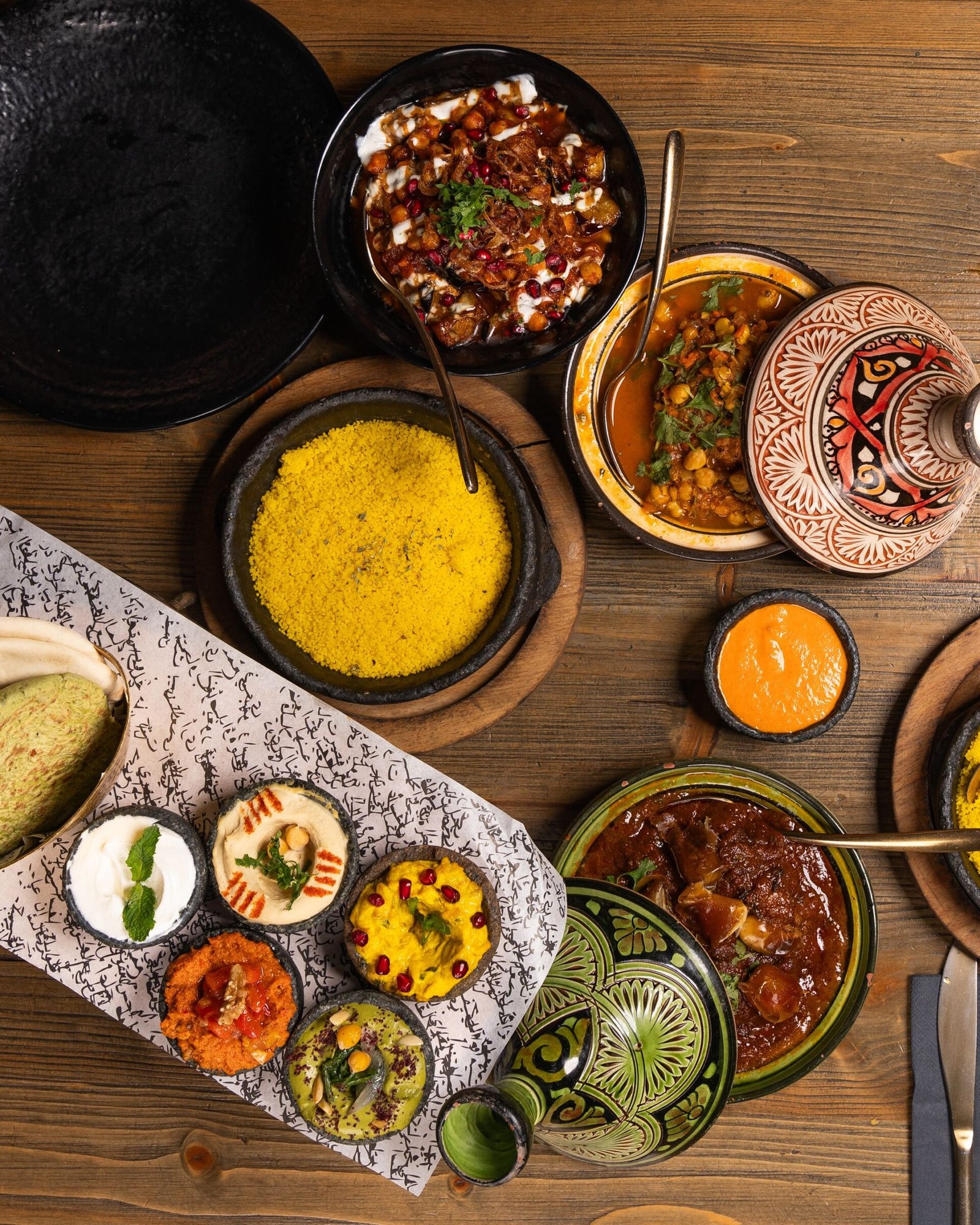
Moroccan cooking is famous around the world for its rich flavors, fragrant spices, slow-cooked dishes, and generous hospitality. But food is only one part of the Moroccan kitchen experience. The kitchen itself has traditionally been a practical and welcoming space where preparation, cooking, conversation, and family life come together.
From handmade ceramics and colorful zellige tiles to natural wood, stone, and metalwork, Moroccan interiors have a distinctive relationship with traditional materials. Today, many homeowners and designers are bringing elements of this style into modern kitchens while keeping the space functional for everyday cooking.
The result does not have to look like a traditional Moroccan riad. A few carefully selected materials and details can introduce the warmth and character of Moroccan design without sacrificing a clean, contemporary kitchen.
What Makes a Moroccan Kitchen Different?
A Moroccan-inspired kitchen often combines natural materials, warm colors, handcrafted details, and practical design.
Traditional Moroccan homes frequently use materials that age beautifully. Handmade tiles may have slight variations from one piece to another, natural wood develops character with use, and metal surfaces can change appearance over time.
This appreciation for natural materials works particularly well in kitchens because the room is already centered around everyday activity. Cooking, preparing vegetables, serving tea, and sharing meals all create a sense of movement and life.
Rather than trying to make every element perfectly uniform, Moroccan design often allows individual materials to contribute their own texture and personality.
The Importance of Natural Materials
Natural materials are one of the easiest ways to introduce Moroccan character into a kitchen.
Wood can add warmth to cabinets and shelves. Stone can create a strong countertop or backsplash. Handmade ceramic pieces can bring color and texture to open shelving.
Metal is another important material in Moroccan craftsmanship. Brass, copper, and other metals have been used by Moroccan artisans for generations in objects ranging from trays and lanterns to decorative and architectural elements.
In a modern kitchen, metal does not have to dominate the room. A brass faucet, cabinet handles, light fixture, or small decorative detail can be enough to introduce warmth.
For homeowners interested in incorporating this material into a contemporary kitchen, MoroccoBrass offers handmade Moroccan brass kitchen fixtures and hardware that can be used to add a handcrafted element to the space.
Brass in the Moroccan Kitchen
Brass has a particularly warm appearance that works naturally with many of the materials commonly associated with Moroccan interiors.
Against white or cream-colored walls, brass can provide contrast. Combined with wood, it can create a warmer and more traditional atmosphere. Paired with stone and neutral tiles, it can add a subtle metallic accent without making the kitchen feel overly decorative.
Brass can also work in very modern kitchens.
A simple kitchen with flat-front cabinets, a stone countertop, and minimal decoration can gain more character from a carefully chosen brass faucet or a set of brass handles.
The key is balance. Instead of using brass on every surface, choose a few areas where the material can become part of the overall design.
Moroccan Zellige and Kitchen Backsplashes
Zellige tile is one of the most recognizable elements of Moroccan design.
Traditional zellige is handmade, and individual tiles can have variations in color, shape, and surface texture. These imperfections are part of their character rather than something to be hidden.
A zellige backsplash can provide a strong visual foundation for a kitchen. Because the tiles already have texture and variation, the rest of the room can remain relatively simple.
White, cream, green, blue, and earthy tones can all work well depending on the desired atmosphere.
A warm brass faucet or hardware can complement these colors particularly well, especially when the kitchen also includes natural wood or stone.
Designing a Kitchen for Cooking
A beautiful kitchen still needs to work well for cooking.
Moroccan cuisine often involves several ingredients and preparation techniques. Fresh herbs, onions, garlic, preserved lemons, spices, vegetables, and meats may all be prepared during the same meal.
Good kitchen design should therefore provide enough workspace and storage for ingredients, cookware, utensils, and serving pieces.
Consider placing frequently used items within easy reach. Open shelves can be useful for displaying ceramic bowls, serving dishes, spice containers, and other objects that are used regularly.
Drawers and cabinets should provide enough organized storage to keep the main preparation areas clear.
The goal is not simply to create a kitchen that looks Moroccan. It should remain a comfortable place to prepare Moroccan food.
Open Shelving and Moroccan Ceramics
Open shelving is another simple way to introduce personality into a kitchen.
Instead of filling shelves with purely decorative objects, combine useful kitchenware with a few carefully chosen pieces.
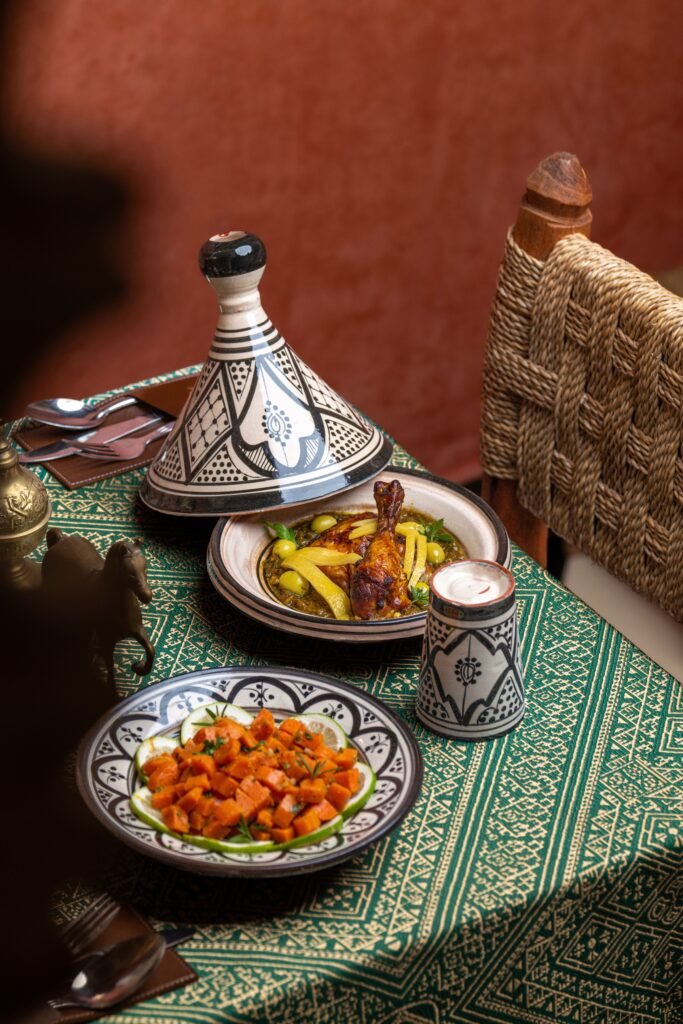
Handmade Moroccan ceramics can work particularly well. Plates, bowls, tagines, glasses, and serving dishes can become part of the visual character of the kitchen while remaining useful for cooking and entertaining.
Natural wood shelves can provide warmth, while brass hardware can add a small amount of contrast.
This approach also makes the kitchen feel less like a showroom and more like a space that is actually being used.
Moroccan Cooking and the Kitchen Experience
The design of a Moroccan kitchen makes more sense when considered alongside the food prepared there.
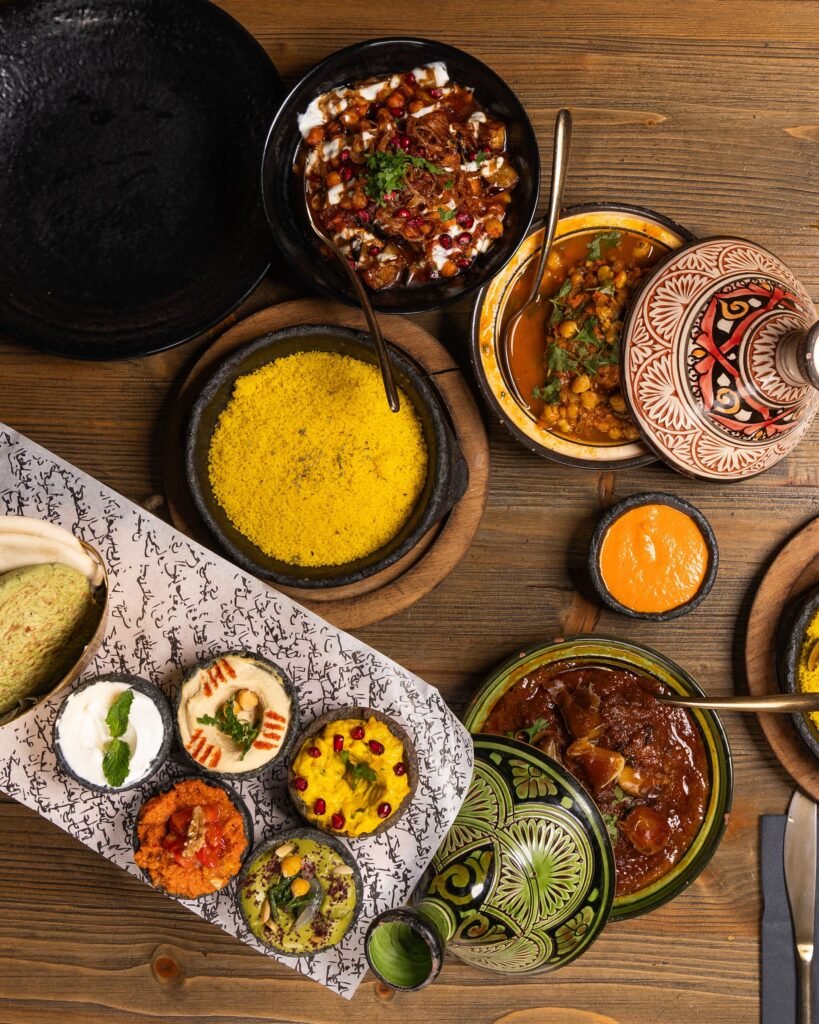
Moroccan cooking includes dishes such as tagines, couscous, harira, pastilla, salads, grilled meats, and a wide variety of vegetable dishes.
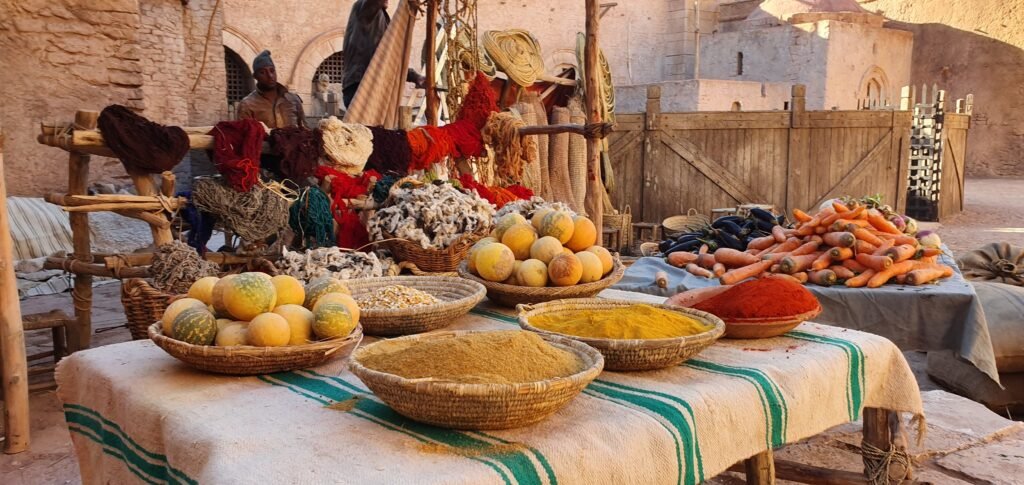
Many recipes rely on combinations of spices rather than a single dominant flavor. Cumin, paprika, ginger, turmeric, cinnamon, saffron, coriander, and preserved lemon can all play important roles depending on the dish.
Cooking these meals is often a process rather than something rushed. Ingredients are prepared, spices are measured, sauces are developed, and food may simmer slowly.
A kitchen designed around this style of cooking should therefore prioritize preparation space, storage, ventilation, and easy access to frequently used ingredients.
Adding Moroccan Style Without Overdoing It
You do not need to completely redesign your kitchen to introduce Moroccan influences.
Start with one or two strong elements.
A brass faucet can become a functional focal point around the sink. Handmade tile can be used for a backsplash. Wooden shelving can display Moroccan ceramics. A traditional pendant light can add warmth above an island or dining area.
The rest of the kitchen can remain simple.
This approach is particularly useful for contemporary homes because it allows traditional craftsmanship to coexist with modern appliances and clean architectural lines.
Mixing Old and New
One of the most interesting aspects of Moroccan-inspired kitchen design is the combination of traditional craftsmanship with modern functionality.
A kitchen can have modern appliances, contemporary cabinets, and a minimalist countertop while still incorporating handmade materials.
This combination prevents the design from feeling like a reproduction of an old interior.
Instead, traditional materials become part of a modern home.
Brass is particularly effective in this type of setting because it can connect older craft traditions with contemporary kitchen design. Depending on the finish and shape, the same material can look traditional, industrial, Mediterranean, or modern.
Choosing Kitchen Hardware Carefully
Small details can have a surprisingly large effect on a kitchen.
Cabinet handles, drawer pulls, faucets, and other hardware are touched and used every day, so both appearance and construction matter.
When selecting hardware, consider the overall materials already present in the kitchen.
If the room contains warm wood, stone, or handmade tiles, brass can complement those materials naturally. If the kitchen is mostly white or neutral, brass can provide a warmer visual accent.
It is also worth considering whether you prefer a consistent finish or a material that changes naturally with age.
Unlacquered brass, for example, can develop a patina through exposure to air, moisture, and regular handling. For some homeowners, this changing appearance is part of the appeal because the material becomes more individual over time.
A Kitchen That Feels Personal
The best Moroccan-inspired kitchens do not necessarily contain the most Moroccan decorations.
Instead, they often feel personal because they combine useful objects, natural materials, craftsmanship, and memories.
A handmade bowl brought back from a trip, a collection of family serving dishes, a traditional tea set, or a brass fixture can all contribute to the atmosphere.
The kitchen becomes a reflection of the people who use it.
That is particularly appropriate for Moroccan culture, where food and hospitality are closely connected. A kitchen is not simply a place where meals are prepared; it can also be a place where people gather, talk, drink tea, and spend time together.
Bringing Moroccan Craftsmanship Into a Modern Kitchen
Moroccan design offers plenty of inspiration for modern kitchens because it is based on materials and craftsmanship rather than a single decorating formula.
Natural wood, handmade ceramics, textured tile, stone, and brass can all be combined in different proportions depending on the style of the home.
The most successful approach is usually to choose a few meaningful elements and allow them to stand out.
A handmade brass faucet or a set of brass cabinet handles may be enough to introduce the character of Moroccan metalworking without changing the entire kitchen.
For those looking for Moroccan-made pieces, MoroccoBrass focuses on handmade brass fixtures and hardware designed for kitchens and other interior spaces.
Ultimately, the goal is to create a kitchen that feels warm, functional, and connected to the materials and traditions that inspired it.
Whether you are preparing a traditional Moroccan tagine, making a simple salad, or gathering around the table with family and friends, the kitchen should feel like a place meant to be lived in.
And that is perhaps the most important idea behind Moroccan kitchen design: good design should make everyday life feel a little more welcoming.