

Nutritious, Wholesome & Perfectly Simple
In the heart of Karnataka Finger, there exists a humble dish that has nourished generations – Ragi Mudde. These simple, nutritious finger millet balls are the epitome of wholesome, rustic cooking, a staple that has sustained farmers and families for centuries. With just two ingredients, ragi flour and water, this dish is a testament to the power of simplicity and the nutritional richness of millets.[reference:0]
I first encountered Ragi Mudde during a visit to rural Karnataka, where it was served as the centerpiece of a hearty meal. The soft, doughy balls, paired with a spicy lentil stew, were unlike anything I had ever tasted. It was humble, filling, and deeply satisfying. Since then, I have been fascinated by this dish and its cultural significance, and I’ve learned that the secret to perfect Ragi Mudde lies in the technique, not the ingredients.
This recipe is a celebration of traditional Indian cuisine. It’s naturally gluten-free, packed with calcium and iron, and incredibly versatile. Whether you’re looking for a healthy, energy-boosting meal or simply want to explore the diverse flavors of Karnataka, Ragi Mudde is a must-try. For more authentic and healthy dinner ideas, explore our collection of dinner recipes.
Why This Recipe Works: Ragi Mudde is the ultimate clean-eating dish. With only two ingredients, it’s naturally gluten-free, vegan, and packed with nutrients. The simple cooking method preserves the millet’s natural goodness, resulting in a soft, smooth, and satisfying meal.
What Is Ragi Mudde?
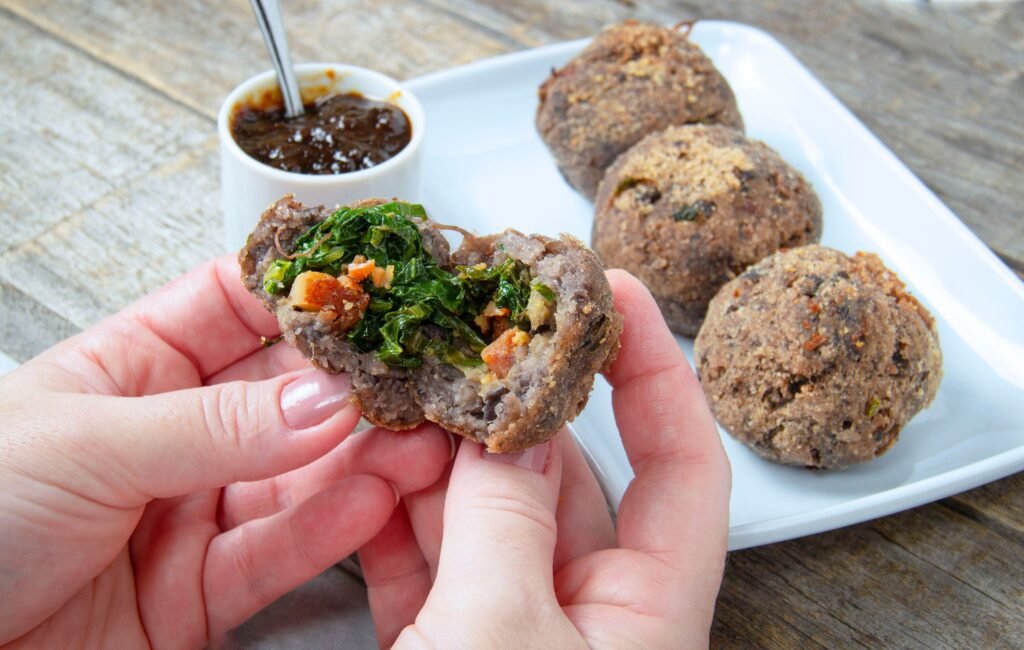
Ragi Mudde, also known as Ragi Sankati or simply “Mudde” which means “lump” or “dough” in Kannada, is a traditional finger millet dish from the state of Karnataka in India.[reference:1] It is a staple food, especially in rural areas, where it is often eaten as a hearty breakfast or lunch.[reference:2] The dish consists of boiled ragi (finger millet) flour and water, rolled into smooth, soft balls. It has a dense, filling texture and a mild, earthy flavor that perfectly complements spicy stews and curries.
Why It’s a Timeless Karnataka Staple
Ragi Mudde has been a cornerstone of Kannada cuisine for centuries.[reference:3] Its enduring popularity comes from its incredible nutritional value and its ability to provide sustained energy. It’s a dish that has sustained farmers through long days of hard work, providing them with the strength and stamina they need.[reference:4] As a popular saying in Karnataka goes, “the one who eats raagi mudde has the strength and power to move hills!”[reference:5]
Flavor & Texture Profile
- Flavor: Mild, earthy, and subtly nutty – the perfect canvas for flavorful curries and stews.
- Texture: Soft, smooth, and dense – a satisfying, doughy texture that is uniquely filling.
- Aroma: Warm, earthy, and comforting – the scent of freshly cooked millet.
Why You’ll Love This Recipe
Incredibly Nutritious
Packed with calcium, iron, and fiber – a true superfood.
Simple Ingredients
Just two ingredients – ragi flour and water.
Gluten-Free & Vegan
Naturally free from gluten and animal products.
Versatile & Filling
Pairs perfectly with sambar, curry, or chutney.
- Incredibly Nutritious: Packed with calcium, iron, and fiber – a true superfood.
- Simple Ingredients: Just two ingredients – ragi flour and water.
- Gluten-Free & Vegan: Naturally free from gluten and animal products.
- Versatile & Filling: Pairs perfectly with sambar, curry, or chutney.
- Authentic Experience: A taste of traditional Karnataka cuisine.
- Budget-Friendly: Made with affordable, staple ingredients.
- Energy Boosting: Provides sustained energy, ideal for active lifestyles.
Ingredients
For the Ragi Mudde
- Ragi (finger millet) flour – 1 cup (fresh, finely milled)
- Water – 2 cups (approximately)[reference:6]
- Salt – ¼ teaspoon (optional, to taste)[reference:7]
- Ghee or oil – 1 teaspoon (optional, for richness and to prevent sticking)[reference:8]
Premium Ingredient Options
- Ragi Flour: Use fresh, high-quality, finely milled ragi flour for the smoothest texture.[reference:9]
- Ghee: Using homemade or high-quality ghee adds a rich, nutty flavor.
- Water: Filtered water ensures a clean, pure taste.
Budget Alternatives
- Use store-bought ragi flour – it’s widely available and affordable.
- Skip the ghee and oil – the recipe works perfectly without them.
- Use regular salt instead of sea salt.
Common Ingredient Mistakes
- Using coarse ragi flour: It can result in a grainy texture – use finely milled flour.
- Adding flour all at once: This can cause lumps – add gradually.
- Not using enough water: The dough will be too dry and crumbly – follow the 1:2 flour-to-water ratio.[reference:10]
Ingredient Substitutions
- Gluten-Free: This recipe is naturally gluten-free.
- Vegan: This recipe is naturally vegan (omit ghee).
- No ghee: Use any neutral oil or skip it entirely.
- No salt: Omit the salt for a sodium-free version.
Equipment
Essential Tools
- Heavy-bottomed pot or saucepan
- Wooden spatula or spoon (sturdy)[reference:11]
- Small bowl (for the slurry)
- Whisk
Optional Tools
- Measuring cups and spoons
- Greased plate (for shaping)
Step-by-Step Instructions
- Make the Slurry
In a small bowl, whisk 2 tablespoons of the ragi flour with about ¼ cup of water until completely smooth and lump-free.[reference:12][reference:13] This slurry will help thicken the water and create a smooth base.
Visual cue: The mixture should be a thin, smooth paste with no lumps.
Pro tip: This step is crucial for preventing lumps in the final dish. - Boil the Water
In a heavy-bottomed pot, bring the remaining 1¾ cups of water to a rolling boil over medium-high heat.[reference:14] Stir in the salt and ghee or oil, if using.[reference:15]
Visual cue: The water should be bubbling vigorously.
Pro tip: A heavy-bottomed pot prevents the mixture from sticking and burning. - Add the Slurry
Pour the ragi-water slurry into the boiling water, stirring constantly. The mixture will thicken almost immediately.[reference:16]
Visual cue: The water will turn cloudy and begin to thicken.
Pro tip: Keep stirring to ensure the slurry is evenly incorporated. - Add the Remaining Flour
Gradually add the rest of the ragi flour (about ⅔ cup) to the pot in small increments. After each addition, stir vigorously with a wooden spatula or ladle to incorporate the flour and prevent lumps.[reference:17]
Texture cue: The mixture will become very thick and dough-like.
Pro tip: Adding the flour gradually is the key to a lump-free mudde. - Cook and Steam
Lower the heat to medium-low, cover the pot, and let it steam for 2–3 minutes.[reference:18] Uncover and stir vigorously again – the dough should look glossy and pull away from the sides of the pot.[reference:19] If it’s very dry, add a splash of water.
Visual cue: The dough should be smooth, glossy, and easily pull away from the pan.
Pro tip: The steaming step helps cook the flour thoroughly and ensures a soft texture. - Shape the Mudde
Remove the pot from heat and let it sit for a minute. Grease your palms with a little water or ghee, then scoop out portions of the mixture and roll into firm balls.[reference:20]
Visual cue: The dough should form smooth, firm balls.
Pro tip: Work quickly while the mixture is still warm, as it hardens as it cools.[reference:21] - Serve
Serve the Ragi Mudde immediately while still warm.[reference:22]
Pro tip: For the best experience, serve with a dollop of ghee on top and a side of sambar, curry, or chutney.[reference:23]
Chef’s Secret: The key to perfect Ragi Mudde is the right technique and a little patience. The traditional method involves using a thick wooden stick to stir the dough in a circular motion, which helps develop a smooth, lump-free texture.[reference:24] While a wooden spatula works well, this technique is a great tip for achieving that authentic, professional result.
Expert Chef Tips
For the Perfect Ragi Mudde
- Use Fresh, Finely Milled Flour: The quality of the flour is paramount. Fresh, finely milled ragi flour will yield the smoothest, softest mudde.[reference:25]
- Maintain the 1:2 Ratio: The ideal flour-to-water ratio is 1:2. This ensures the perfect consistency – not too hard and not too soft.[reference:26]
- Stir Vigorously: The key to a lump-free mudde is constant, vigorous stirring, especially when adding the flour.
- Knead While Warm: Shape the mudde while the dough is still warm. It will be easier to handle and will result in a softer texture.[reference:27]
- Wet Your Hands: Keep a bowl of water nearby to wet your hands while shaping. This prevents the dough from sticking.[reference:28]
Flavor Balancing
- Salt: A small amount of salt enhances the earthy flavor of the ragi.
- Ghee: A dollop of ghee adds a rich, nutty flavor and a luxurious texture.
- Accompaniments: The mild flavor of Ragi Mudde is perfectly complemented by spicy, tangy curries and chutneys.
Texture Improvement Tips
- Add a Slurry: Mixing a small amount of flour with water to make a slurry before adding it to the boiling water is crucial for a smooth texture.[reference:29]
- Don’t Overcook: Overcooking can make the mudde tough. Cook until the dough is glossy and pulls away from the pan.
- Shape Quickly: The dough hardens as it cools, so shape the mudde while it’s still warm and pliable.
Cooking Science: Ragi flour is high in amylose, a type of starch that gelatinizes when heated with water. This gelatinization is what gives the mudde its unique, dense, and doughy texture. The constant stirring during cooking helps break down the starch molecules, creating a smooth and cohesive dough.
Troubleshooting
- Mudde is too dry or crumbly – You may have used too little water. Next time, add a splash more water or a little ghee to the dough.
- Mudde is too soft or sticky – You may have used too much water. Add more ragi flour to the mixture.
- Mudde has lumps – You may have added the flour too quickly or not stirred enough. Ensure the slurry is smooth and add the remaining flour gradually while stirring vigorously.
- Mudde is hard after cooling – Ragi Mudde hardens as it cools. It’s best served immediately while still warm.
- Ragi flour is grainy – You may be using coarse flour. For the best texture, use finely milled ragi flour.
Recipe Variations
Classic Ragi Mudde
Follow the recipe as written for the authentic Karnataka staple.
Ragi Mudde with Rice
Add a little cooked rice to the dough for a slightly different texture and flavor, known as Ragi Sankati.[reference:30]
Spiced Ragi Mudde
Add a pinch of cumin or crushed green chilies to the water for a subtle flavor kick.[reference:31]
Instant Pot Ragi Mudde
Use the ‘Soup’ or ‘High’ setting on your Instant Pot to cook the ragi mixture.[reference:32]
More Delicious Variations
- Ragi Mudde with Greens: Serve with a spicy greens curry or a leafy vegetable stir-fry.[reference:33]
- Ragi Mudde with Chicken Curry: A popular non-vegetarian pairing, the rich, spicy chicken curry is a perfect match.[reference:34]
- Ragi Mudde with Menthyada Gojju: A sweet and sour fenugreek and tamarind dish that is a traditional accompaniment.[reference:35]
- Ragi Mudde with Chutney: For a simple meal, serve with a spicy groundnut or coconut chutney.[reference:36]
Serving Suggestions
Classic Pairings
Serve Ragi Mudde with a dollop of ghee on top and a side of sambar, spicy curry, or chutney.[reference:37] For a complete meal, pair it with a soupy lentil saaru (bassaru) or a spicy chicken or mutton curry.[reference:38] For more authentic meal ideas, explore our collection of dinner recipes.
Garnishes
A drizzle of ghee, a sprinkle of salt, or a side of fresh coriander.
Drinks
A glass of chilled buttermilk or a cup of warm filter coffee complements this meal perfectly.
Presentation Ideas
Serve the Ragi Mudde on a banana leaf or a traditional plate for an authentic Karnataka experience. Place a dollop of ghee on top and surround it with small bowls of sambar, curry, and chutney.
Storage & Reheating
Refrigeration
Ragi Mudde is best enjoyed fresh. However, any leftovers can be stored in an airtight container in the refrigerator for up to a day.
Freezing
Freezing is not recommended as the texture of the mudde will change upon thawing.
Reheating Methods
- Steaming (Best): Reheat the mudde by steaming it for a few minutes until it’s soft and warm.
- Microwave: Sprinkle a few drops of water on the mudde and heat it in 30-second intervals until warm.
- Skillet: Pan-fry slices of the mudde with a little ghee for a crispy, savory treat.
FAQ
What is Ragi Mudde made of?
Ragi Mudde is traditionally made with just two ingredients: ragi (finger millet) flour and water.[reference:39] Salt and ghee are optional additions.
Is Ragi Mudde healthy?
Yes, it is incredibly healthy. Ragi is a rich source of calcium, iron, and dietary fiber.[reference:40] It is also naturally gluten-free and provides sustained energy.[reference:41]
What does Ragi Mudde taste like?
It has a mild, earthy, and subtly nutty flavor. It is intentionally bland so that it can be paired with flavorful curries and stews.[reference:42]
What is the water-to-ragi flour ratio for Ragi Mudde?
The standard ratio is 2 cups of water for 1 cup of ragi flour.[reference:43] This 1:2 ratio is considered the gold standard for achieving the perfect consistency.[reference:44]
Why did my Ragi Mudde turn out hard?
It may have been overcooked or not enough water was used. Ragi Mudde also hardens as it cools, so it’s best served immediately.
Can I make Ragi Mudde without ghee?
Yes, ghee is optional. The recipe works perfectly well without it.
How do I prevent lumps in Ragi Mudde?
To prevent lumps, first make a smooth slurry with a small amount of flour and water. Then, add the remaining flour gradually while stirring constantly.[reference:45]
What are the best accompaniments for Ragi Mudde?
It is traditionally served with sambar, spicy curry (like chicken or mutton curry), bassaru (a soupy lentil stew), or a chutney.[reference:46][reference:47]
Is Ragi Mudde gluten-free?
Yes, ragi (finger millet) is naturally gluten-free, making this dish a great option for those with gluten sensitivities.[reference:48]
Can I use regular flour instead of ragi flour?
No, this recipe is specifically designed for ragi flour. Using regular flour will not yield the same texture or nutritional benefits.
Nutrition (estimated per serving – 1 medium mudde)
- Calories: 120-150
- Protein: 3-4g
- Carbohydrates: 25-30g
- Fat: 1-3g
- Fiber: 3-4g
- Calcium: 15-20% DV[reference:49]
- Iron: 8-10% DV
Note: Nutrition values are estimates and may vary based on specific ingredients, portion sizes, and cooking methods.
Recipe Card
| Ragi Mudde – Karnataka’s Traditional Finger Millet Balls | |
| Cuisine | Indian (Karnataka) |
| Course | Main Course |
| Prep Time | 5 minutes |
| Cook Time | 15 minutes |
| Total Time | 20 minutes |
| Servings | 4 |
| Calories | 120-150 per serving |
Ingredients
- 1 cup ragi (finger millet) flour (fresh, finely milled)
- 2 cups water (approximately)
- ¼ teaspoon salt (optional)
- 1 teaspoon ghee or oil (optional, for richness)
Instructions
- In a small bowl, whisk 2 tablespoons of ragi flour with ¼ cup water until smooth and lump-free.
- In a heavy-bottomed pot, bring the remaining 1¾ cups of water to a rolling boil. Stir in salt and ghee (if using).
- Pour the slurry into the boiling water, stirring constantly. The mixture will thicken immediately.
- Gradually add the rest of the ragi flour in small increments, stirring vigorously after each addition to prevent lumps.
- Lower the heat, cover, and let it steam for 2-3 minutes. Uncover and stir until the dough is glossy and pulls away from the sides.
- Remove from heat and let it sit for a minute. Grease your palms with water or ghee, scoop out portions, and roll into firm balls.
- Serve immediately while still warm.
Notes
- Use fresh, finely milled ragi flour for the smoothest texture.
- The 1:2 flour-to-water ratio is key to achieving the perfect consistency.
- Shape the mudde while the dough is still warm – it hardens as it cools.
- Serve with a dollop of ghee and a side of sambar, curry, or chutney.
Nutrition (per serving)
Calories: 120-150 | Protein: 3-4g | Carbs: 25-30g | Fat: 1-3g | Fiber: 3-4g | Calcium: 15-20% DV | Iron: 8-10% DV
Enjoy your homemade Ragi Mudde!
Don’t forget to share your creation and tag us!